
 Home
Home06 30 26
Leather Rivets: How to Match Rivets to Material Thickness
A well-set rivet is one of those small details that quietly makes a leather project feel finished. It sits cleanly, holds firm, and looks like it was meant to be there. A poorly matched rivet is a little less subtle. It may spin, lean, crush the leather, or sit too high on the surface.
Leather Rivets Without the Guesswork: How to Match Double Cap Rivets to Material Thickness
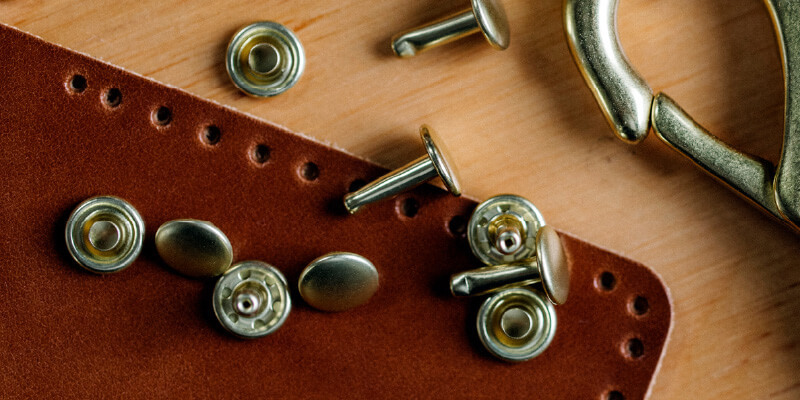
The good news is that choosing leather rivets is not guesswork once you know the order of decisions. Start with the full material stack, choose the right post length, match the cap diameter to the project, and then pick the finish.
What Are Double Cap Rivets?
Double cap rivets are two-piece fasteners with a finished cap on both sides. They are commonly used in leathercraft when both sides of the fastener may be visible and the maker wants a clean, polished look from front to back.
You will often see double cap rivets used on:
- Leather straps
- Bag handles and tabs
- Wallets and small leather goods
- Pet collars and leashes
- Closures, loops, and reinforcements
- Accessories where both sides of the hardware are visible
To use them well, the rivet needs to match the actual thickness of the material where it will be set. That means choosing the correct post length, selecting a cap diameter that suits the scale of the piece, and using the right setter and base.
Why Rivet Fit Matters
Most rivet problems come back to fit. If the post is too short, it may not form securely inside the cap. If the post is too long, it can bend, fold, or mushroom unevenly. If the hole is too large, the rivet may spin. If the setter does not match the cap, the rivet may flatten, mark, or drift out of alignment.
A good-looking cap cannot make up for the wrong post length. The rivet, leather, hole, setter, and base all have to work together.
That may sound like a lot for one tiny fastener, but once you understand the sequence, the process becomes much more predictable.
Start With the Full Material Stack
Before choosing a rivet, measure the full stack of material at the exact point where the rivet will be set.
That stack might include:
- Two layers of leather
- A folded strap end
- A lining
- A reinforcement piece
- Glue between layers
- A skived section
- Fabric, webbing, or another material
Do not choose the rivet based only on the thickness of one leather piece before assembly. The rivet does not care what the leather measured on the cutting table. What matters is the total thickness it must pass through in the finished build.
This is especially important for folded straps, lined tabs, reinforced handles, and small leather goods with skived areas. The thickness can change quickly across a project.
Account for Compression
Leather compresses under pressure. A softer temper leather may squeeze down more during setting, while firmer strap leather may resist compression. Glue, lining, and reinforcement can also change how the stack behaves.
This is why test setting is worth the extra minute. Use the same layers, hole size, rivet, setter, and base you plan to use on the final piece. A test on scrap can show whether the post length is right before the finished project gets involved.
Better to not use the finished project as the experiment.
Choose Post Length First
Post length is the working part of the rivet. It passes through the leather and forms inside the cap when pressure is applied.
A good post length should:
- Pass through the full material stack
- Leave enough post to form securely
- Pull the caps together cleanly
- Set firmly without spinning
- Avoid puckering or crushing the leather
As a practical rule of thumb, you generally want about 2-3mm of rivet post sticking through the material before setting. That gives the post enough room to form without leaving so much extra length that it folds or creates a bulky set.
Too little post can create a weak set. Too much post can create a messy one. The right post length should feel controlled when set.
Then Choose Cap Diameter
Once you know the post length you need, choose the cap diameter.
Cap diameter affects both appearance and surface support. Smaller caps often look cleaner on slim projects, while larger caps can feel more balanced on wider straps, heavier leather goods, or areas near larger hardware.
A smaller cap may suit:
- Wallets
- Card holders
- Small tabs
- Thin straps
- Detail work
A larger cap may suit:
- Bag handles
- Strap ends
- Pet collars
- Leashes
- Heavier leather goods
- Reinforced connection points
The goal is not simply to make the rivet noticeable. It should look intentional. A cap that is too large can overpower a small piece. A cap that is too small can look underbuilt on heavier work.
Scale matters.
Pick the Finish Last
Finish is important, but it need not be the first decision.
A beautiful finish will not save a rivet that is too long, too short, poorly set, or out of scale with the project. First solve the fit. Then choose the look.
Common finish directions include:
- Natural brass
- Antique brass
- Nickel plate
- Nickel matte
- Antique copper
- Copper plate
- Black matte
Match the finish to the leather color, surrounding hardware, and overall style of the finished piece. Warm finishes can pair nicely with natural, tan, brown, and heritage-style leathers. Cooler finishes often work well with black, gray, navy, and more modern designs.
If the project includes buckles, rings, snaps, or bag hardware, use those pieces as your guide. Hardware does not have to match perfectly every time, but it should look intentional.
Project Fit Guide for Double Cap Rivets
There is no single rivet setup that works for every leather project. A rivet that looks right on a bag handle may be too large for a wallet. A rivet that works beautifully on a card pocket may not have the right scale for a collar.
Use the project type as your starting point, then confirm the final choice against the actual material stack.
Wallets and Small Leather Goods
Wallets, card holders, and small accessories often involve thinner stacks and tighter spaces. In these projects, extra post length has very little room to breathe.
For small leather goods, measure carefully at the exact rivet point and watch for skived areas that change thickness. Keep the cap diameter in scale with the pattern, especially near pocket openings, corners, and finished edges.
A clean rivet can add a sharp detail. An oversized or crooked rivet can quickly become the loudest part of the piece.
Straps, Bags, and Handles
Straps, bag tabs, and handles often involve folded leather, reinforcement, or heavier-use areas. These are places where rivets are often both functional and visible.
Measure the stack after folding, gluing, and lining. Choose a post length that fits the finished thickness, then select a cap diameter that balances with nearby hardware such as buckles, rings, or swivel snaps.
A more substantial cap can look right at home on a strap or handle, as long as it fits the build and does not distort the leather around the set.
Collars, Leashes, and Heavier Leather Goods
Collars, leashes, and heavier leather goods often involve thicker stacks and more functional stress points. These projects call for careful fitting because the rivet may carry more of a burden.
Bigger hardware is not automatically better. The right choice is the rivet that fits the compressed stack, sets cleanly, and suits the width and weight of the piece.
For heavier projects, test before setting the final hardware. If the sample looks forced on scrap, it will not magically become graceful on the finished piece.
Rivet Setters Matter Too
Even the right rivet needs the right tool.
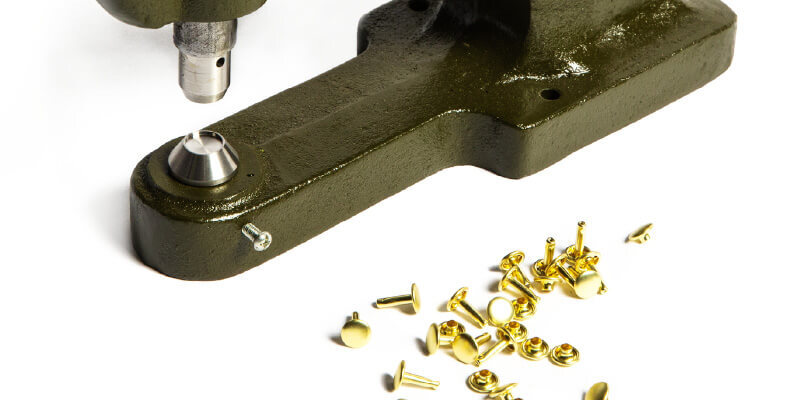
Use a rivet setter that is manufactured specifically for your hardware. A rivet setter controls how force reaches the cap. If the setter does not match the cap shape, it can flatten the dome, mark the surface, or push the rivet out of alignment. If the base is unstable, the lower cap may shift while the top is being set.
For a cleaner set:
- Use a setter that matches the rivet cap
- Support the lower cap evenly
- Keep the post vertical
- Punch a clean, properly sized hole
- Apply controlled pressure
- Stop and check alignment if the rivet starts to lean
More force rarely fixes bad alignment. It usually just makes the problem worse.
Do Not Ignore Hole Size
The hole plays a bigger role than many makers expect.
If the hole is too small, the post may distort the leather as it passes through. If the hole is too large, the rivet may shift, lean, or spin after setting. The best hole allows the post to pass through cleanly without unnecessary looseness.
A clean punch helps, especially near edges, corners, and layered areas. Ragged or stretched holes can affect how the rivet sits and how securely it sets.
The rivet and hole should have a neat working relationship. No drama required.
A Simple Rivet Size Guide for the Bench
Use this sequence when choosing double cap rivets:
- Measure the full material stack at the exact rivet point.
- Account for compression from leather temper, lining, glue, skiving, or reinforcement.
- Choose the post length for the compressed stack.
- Select the cap diameter for project scale and surface support.
- Match the finish to the rest of the hardware.
- Use the correct setter for the cap shape.
- Test on scrap before setting the final piece.
That order keeps the decision grounded in the build.
Common Rivet Problems and What to Check
The Rivet Spins After Setting
Check the post length, hole size, and material thickness. The post may not be matched to the material thickness after compression, or the hole may be too large.
The Cap Sits Crooked
Check setter alignment, base support, and whether the post was vertical before setting. A crooked start often becomes a crooked finish.
The Leather Puckers Around the Rivet
The post may be too long, the leather may be soft, or too much force may have been used.
The Cap Looks Flattened or Marked
The setter may not match the cap shape, or the strike may be too heavy. Use a properly matched setter and controlled pressure.
The Rivet Does Not Feel Secure
The post may be too short, the cap may not be fully engaged, or the material stack may not be thick enough for that rivet size.
Are Rivets a Replacement for Stitching?
Sometimes, but not always.
Rivets and stitching do different jobs. A rivet creates a fastened point. Stitching creates a sewn construction line. Some leather goods use rivets alone, some use stitching alone, and many use both.
Rivets are useful for reinforcing stress points, securing tabs, attaching straps, and adding hardware connection points. Stitching is useful for joining seams, securing pockets, and building structure across a larger area.
The right choice depends on the design, stress point, material, and intended use.
Quick Answers Before You Set
How do I choose the right post length for leather rivets?
Measure the compressed thickness of the full material stack. The post should pass through the leather and form securely inside the cap without leaving so much extra length that it folds, bends, or crushes the material.
What cap diameter should I use for double cap rivets?
Choose cap diameter after the post length is correct. Smaller caps often suit wallets and slim details. Larger caps can look more balanced on straps, handles, collars, and heavier leather goods.
Why do double cap rivets bend?
Rivets can bend when the post is too long, the hole is uneven, the setter is misaligned, or the base does not support the lower cap properly.
Why do my rivets spin after setting?
A spinning rivet may mean the post length is not matched to the material thickness, the hole is too large, or the rivet did not compress properly during setting.
Can double cap rivets be used with fabric?
Yes, double cap rivets can be used with leather, fabric, and other materials when the post length, hole size, and material stack are properly matched. Softer materials may need extra care or reinforcement.
Explore Leather Rivets and Setting Tools at Buckleguy
Once you understand material thickness, post length, cap diameter, and finish, choosing leather rivets becomes much more controlled. The hardware stops being a guess and starts becoming part of the build.
Buckleguy carries double cap rivets, rivet setters, leather fasteners, and related leather working supplies for makers who want their hardware to fit the work, not fight it.
Explore the available options at buckleguy.com, compare them against your leather stack, and set a test piece before the final set. The extra minute will pay off in the end.